
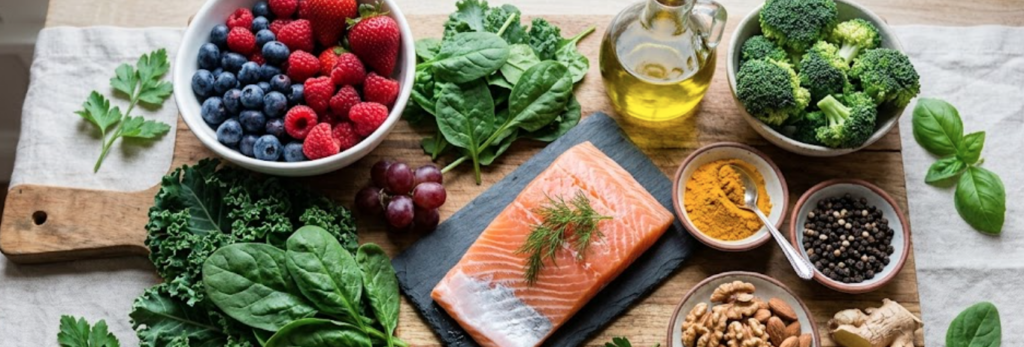
Inflammation has become one of the most discussed topics in nutrition, and for good reason. Chronic inflammation is implicated in everything from cardiovascular disease to metabolic dysfunction to impaired athletic recovery. The supplement industry has responded by producing an enormous range of products claiming to reduce it, and the wellness content ecosystem has followed with lists of superfoods, detoxes, and protocols promising to put out the inflammatory fire.
Most of it misses the point. And for active adults and athletes especially, the conversation around inflammation requires a more nuanced frame — because not all inflammation is the enemy.
Understanding Inflammation: The Part Most Articles Skip
Before talking about which foods reduce infxlammation, it is worth being precise about what inflammation actually is and why treating it as uniformly bad leads to the wrong conclusions.
Inflammation is the immune system’s response to injury, infection, or stress. It is a fundamental healing mechanism. When you train hard, you create micro-damage in muscle tissue. The inflammatory response that follows — the soreness, the swelling, the immune activation — is what initiates the repair process that makes you stronger. Without acute inflammation, training adaptation does not happen.
The problem is not acute exercise-induced inflammation. The problem is chronic, systemic, low-grade inflammation — the kind that persists beyond the context of a specific injury or training load and becomes a background state that impairs recovery, compromises immune function, disrupts hormonal balance, and over time contributes to chronic disease.
Chronic inflammation in active adults is typically driven by a combination of factors: inadequate sleep, high psychological stress, excessive training load without adequate recovery, gut dysbiosis, and — most relevantly for this post — a dietary pattern that consistently promotes inflammatory processes rather than resolving them.
What food can do is meaningfully influence the chronic, systemic side of the inflammation equation. It cannot and should not suppress the acute inflammatory response to training — that would undermine the adaptation you are training for. What it can do is reduce the inflammatory background noise that accumulates from diet, stress, poor sleep, and inadequate recovery, and support the resolution of inflammation after it has served its purpose.
The Most Consistently Anti-Inflammatory Foods
Fatty fish
Salmon, sardines, mackerel, herring, and anchovies are the most evidence-backed anti-inflammatory foods available. The mechanism is specific and well-established: these fish are rich in EPA and DHA, the long-chain omega-3 fatty acids that are the direct precursors to a class of signaling molecules called resolvins and protectins — compounds that actively resolve inflammation rather than simply suppressing it.
For athletes, the EPA and DHA in fatty fish have specific performance relevance. Research in athletes shows that regular omega-3 consumption reduces exercise-induced muscle damage, accelerates recovery of muscle function after hard sessions, and decreases the magnitude of delayed onset muscle soreness. These are not marginal effects. Studies on athletes consuming adequate EPA and DHA consistently show meaningful differences in recovery metrics compared to those with low omega-3 intake.
The practical target from research is roughly one to two grams of combined EPA and DHA per day for anti-inflammatory benefit. Two to three servings of fatty fish per week gets most people close to this range. Canned salmon, canned sardines, and canned mackerel are cost-effective and require no cooking, making them practical options for busy athletes.
For those who do not eat fish regularly, algae-based omega-3 supplements provide the same EPA and DHA — this is where fish get their omega-3s in the first place — and are the most effective non-fish source.
Berries
Blueberries, strawberries, raspberries, cherries, and blackberries are among the most studied foods for exercise recovery specifically. They are rich in anthocyanins — the flavonoid compounds responsible for their deep colors — which have potent antioxidant and anti-inflammatory effects at the cellular level.
Tart cherries in particular have been studied extensively in athletic populations. Multiple randomized controlled trials have found that tart cherry juice consumed before and after intense training reduces markers of muscle damage, decreases muscle soreness, and improves recovery of strength following eccentric exercise. The effect is meaningful enough that some elite endurance programs have incorporated tart cherry juice as a standard recovery protocol.
Beyond tart cherries, mixed berries consumed regularly provide ongoing support for reducing chronic inflammatory markers. They digest easily, pair with almost everything, and work well as pre-workout fuel given their predominantly simple carbohydrate content.
Leafy greens and cruciferous vegetables
Spinach, kale, arugula, chard, broccoli, Brussels sprouts, and cauliflower provide a dense array of anti-inflammatory compounds including vitamins C and K, folate, and sulforaphane — a compound found particularly in cruciferous vegetables that activates the Nrf2 pathway, one of the body’s primary internal antioxidant and anti-inflammatory defense mechanisms.
The vitamin K content in leafy greens is relevant for athletes specifically because of its role in bone metabolism and vascular health. Chronic inflammation impairs bone remodeling, and consistent vitamin K intake supports the calcification processes that maintain bone density under high training loads.
The practical note for athletes is to include these vegetables at meals that do not immediately precede training — the fiber content is generally beneficial but can cause GI discomfort during exercise for some people.
Olive oil
Extra virgin olive oil is one of the most well-researched single foods in the nutrition literature, and its anti-inflammatory properties are among the most clearly established. The primary active compound is oleocanthal, a phenolic compound that inhibits the same inflammatory enzymes as ibuprofen — at relevant doses, with a similar but gentler mechanism.
The Mediterranean diet’s consistent association with reduced chronic disease and inflammatory markers is attributed in significant part to its high olive oil consumption. For athletes, using extra virgin olive oil as a primary fat in cooking and dressings provides ongoing anti-inflammatory support without any specific protocol.
The distinction between extra virgin and refined olive oil matters here. The phenolic compounds responsible for the anti-inflammatory effects are found in significantly higher concentrations in extra virgin olive oil. The peppery, slightly bitter taste at the back of the throat when consuming quality extra virgin olive oil is the oleocanthal — a reliable indicator of phenolic content.
Turmeric and ginger
These two receive more supplement-industry attention than almost any other anti-inflammatory ingredients, and the underlying evidence, particularly for curcumin (the active compound in turmeric) and gingerols (the active compounds in ginger), is genuinely meaningful.
The caveat is that curcumin from turmeric has very low bioavailability on its own. Consuming it with black pepper — which contains piperine, a compound that increases curcumin absorption by up to two thousand percent — significantly improves the effect. Most of the research on curcumin uses either a piperine-enhanced formulation or a concentrated supplement. Cooking with turmeric alongside black pepper is the practical dietary approach.
Ginger has separate anti-inflammatory and analgesic properties, and several studies in athletic populations have found that regular ginger consumption reduces exercise-induced muscle pain. It is also one of the more reliably effective foods for nausea, which is occasionally relevant for athletes dealing with GI issues during training.
Nuts and seeds
Walnuts, flaxseeds, and chia seeds are notable for containing alpha-linolenic acid (ALA), the plant-based omega-3 fatty acid. ALA is not as directly anti-inflammatory as EPA and DHA — it requires conversion in the body, and that conversion is inefficient — but it contributes to overall omega-3 status and provides additional anti-inflammatory benefit alongside the phenolic compounds in walnuts and the fiber in flaxseeds and chia.
Almonds and other nuts provide vitamin E, a fat-soluble antioxidant with anti-inflammatory properties that is particularly relevant for athletes given its role in protecting cell membranes from oxidative damage during exercise.
Green tea
The catechins in green tea, particularly EGCG (epigallocatechin gallate), are among the most studied plant polyphenols for anti-inflammatory and antioxidant effects. Regular green tea consumption is consistently associated with lower inflammatory markers including C-reactive protein and interleukin-6.
For athletes, green tea also provides a moderate amount of caffeine alongside the anti-inflammatory compounds — making it a functional pre-workout option that doubles as an anti-inflammatory habit.
Whole grains
Brown rice, oats, quinoa, and whole grain bread provide fiber that feeds beneficial gut bacteria — which in turn produce short-chain fatty acids including butyrate, a compound with direct anti-inflammatory effects on the gut lining and systemic inflammatory pathways. The relationship between gut microbiome diversity and systemic inflammation is one of the more active areas of research in nutrition science, and dietary fiber is the primary driver of microbiome health.
For athletes, whole grains also provide the carbohydrate base that fuels training — meaning the anti-inflammatory benefit comes alongside the performance benefit, not at the cost of it.
What Drives Inflammation in Athletes Specifically
Understanding which foods reduce inflammation is most useful alongside understanding what is driving inflammation in the first place. For active adults, the common drivers are more nuanced than simply “bad foods.”
Inadequate carbohydrate intake relative to training load increases inflammatory markers. When athletes are consistently under-fueled — particularly carbohydrate restricted — the physiological stress of training without adequate fuel generates systemic inflammatory signaling that compounds rather than resolves with each session.
Inadequate total calorie intake has the same effect. Chronic energy restriction is itself pro-inflammatory, which is one reason that the health consequences of underfueling in athletes go well beyond performance — they include immune suppression, hormonal disruption, and impaired recovery.
High training load without adequate recovery generates cumulative inflammatory burden. The anti-inflammatory diet works best as a complement to adequate rest, not as a substitute for it.
Poor sleep is one of the most potent drivers of chronic inflammation independently of diet. Even a well-constructed anti-inflammatory diet cannot fully compensate for consistently inadequate sleep.
Ultra-processed foods, seed oils used at high heat in large quantities, refined sugar in large quantities, and alcohol in significant amounts consistently increase inflammatory markers. These are not foods to categorically eliminate — context and quantity matter — but their consistent overconsumption shifts the dietary pattern in a pro-inflammatory direction.
What an Anti-Inflammatory Diet Actually Looks Like
The research does not support the idea of an anti-inflammatory diet as a specific protocol with a meal plan to follow. What it supports is a dietary pattern — the overall composition of what is eaten across days and weeks — that consistently emphasizes the foods described above and limits the habitual overconsumption of ultra-processed and high-sugar foods.
The Mediterranean diet is the most studied dietary pattern with anti-inflammatory evidence, and its components map closely to the foods described above: abundant vegetables and fruit, olive oil as the primary fat, regular fatty fish, legumes, whole grains, and moderate amounts of dairy and lean protein.
For athletes, the anti-inflammatory pattern needs to be built on a foundation of adequate carbohydrate and total calorie intake — because the performance cost of under-fueling generates its own inflammatory burden that no superfood can offset. Eating salmon and blueberries while significantly underfueling training is not an anti-inflammatory strategy. Eating adequately to support training, with an emphasis on the foods described above, is.
A Practical Starting Point
Rather than overhauling your diet or reaching for a supplement protocol, the most evidence-based approach to reducing chronic inflammation through food is to make consistent additions:
Add a serving of fatty fish two to three times per week. Add berries to breakfast or as a snack most days. Use extra virgin olive oil as your primary cooking fat. Include leafy greens and cruciferous vegetables at most dinners. Add walnuts or ground flaxseed to oatmeal or yogurt. Drink green tea in the morning. Eat whole grains as your carbohydrate base rather than refined alternatives.
These are additions, not eliminations. The anti-inflammatory diet is not a restriction protocol. It is a nutrient-dense, athlete-appropriate way of eating that happens to also support the chronic inflammatory balance that determines how well you recover, how your immune system functions, and how you feel across a training cycle.
If you want to build a nutrition approach that supports your training and your recovery, not just on paper but in practice, a free connect call is the place to start.
Frequently Asked Questions
What are the most anti-inflammatory foods? The foods with the strongest and most consistent anti-inflammatory evidence are fatty fish (salmon, sardines, mackerel), berries (particularly tart cherries and blueberries), extra virgin olive oil, leafy greens and cruciferous vegetables, turmeric with black pepper, walnuts and flaxseeds, green tea, and whole grains. These foods work best as part of an overall dietary pattern rather than consumed individually as superfoods.
Do anti-inflammatory foods help with exercise recovery? Yes, and several have specific evidence in athletic populations. Tart cherry juice has been shown in multiple randomized controlled trials to reduce muscle damage markers and soreness after intense exercise. Omega-3 fatty acids from fatty fish reduce exercise-induced muscle damage and accelerate recovery of muscle function. Berries and polyphenol-rich foods support the resolution of acute exercise-induced inflammation. These effects are additive over time — consistent intake across a training cycle produces better outcomes than occasional use around hard sessions.
Should athletes try to reduce inflammation from training? With an important nuance: acute exercise-induced inflammation is part of the adaptation process and should not be fully suppressed. High-dose antioxidant supplements taken immediately post-workout have actually been shown in some research to blunt training adaptation by interfering with this process. The goal is to reduce chronic, systemic inflammation — the background inflammatory state — not to eliminate the acute inflammatory response to training. Whole food sources of anti-inflammatory compounds at the doses found in a normal diet do not appear to blunt adaptation in the way high-dose isolated supplements can.
Is an anti-inflammatory diet the same as the Mediterranean diet? Largely, yes. The Mediterranean diet is the most studied dietary pattern with anti-inflammatory evidence, and its composition closely aligns with what the anti-inflammatory foods research supports — abundant vegetables and fruit, olive oil as the primary fat, regular fatty fish, legumes, whole grains, and moderate amounts of dairy and lean protein. It is not a restrictive protocol — it is a pattern of emphasis.
What foods cause inflammation? Foods consistently associated with increased inflammatory markers include ultra-processed foods eaten regularly in large quantities, refined sugar consumed habitually in excess, alcohol in significant amounts, and trans fats. Saturated fat from red meat is associated with inflammation at high habitual intake. Context and quantity matter significantly — occasional consumption of any of these does not meaningfully shift chronic inflammatory status. The dietary pattern across weeks and months matters far more than individual meals.